How Retatrutide Listings Describe Purity Percentage
A look at how retatrutide listings phrase purity percentage, covering HPLC figures, COA batches, and what a stated number does and doesn't confirm.
Anika Patel, MD, MPH is a board-certified physician with a Master of Public Health from Harvard T.H. Chan School of Public Health whose research bridges internal medicine, obesity medicine, and the public health implications of novel peptide therapeutics.
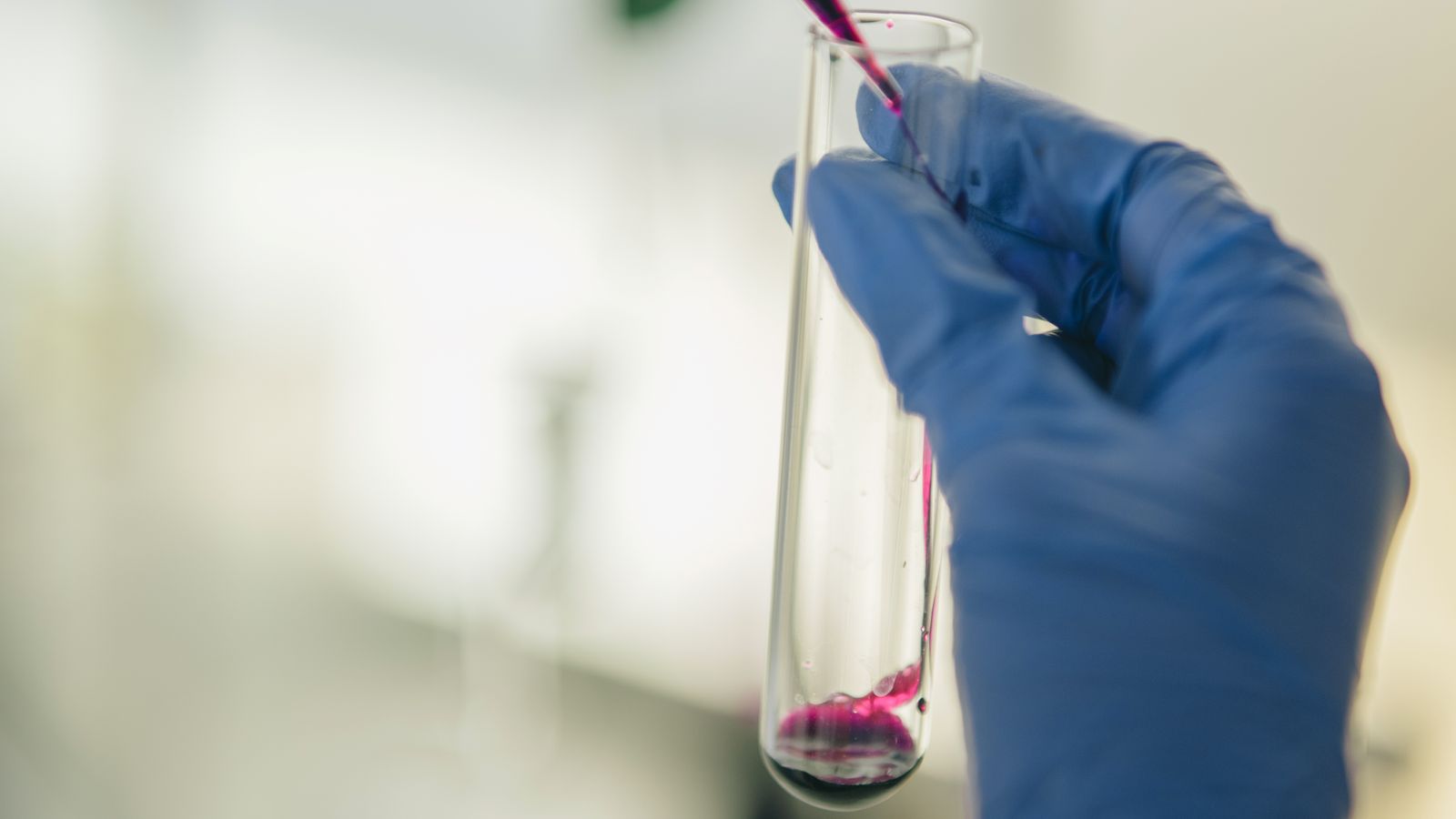
How retatrutide listings describe purity percentage varies more than buyers expect, since “purity” on a product page can point to a testing method, a single batch result, or a general claim with no attached documentation at all. The number itself is usually simple — a percentage near the high nineties — but what stands behind that number, and whether it is verifiable, differs a great deal from one listing to the next.
What the Percentage Is Meant to Represent
Purity percentage on a peptide listing is intended to describe how much of the material in a vial is the target compound itself, as opposed to residual solvents, synthesis byproducts, or other impurities left over from manufacturing. The figure is derived from an analytical test, most commonly high-performance liquid chromatography (HPLC), which separates a sample into its component peaks and measures the relative area of the peak that corresponds to the intended peptide. A listing that states “≥98% purity (HPLC)” is referencing that kind of chromatographic result, at least in principle.
The percentage is a proportion, not a mass. It says nothing on its own about how much peptide is actually in the vial — that depends on the labeled quantity and on whether the vial’s net weight matches what the label claims. Purity and quantity are two separate claims, and listings that blur them together are worth reading carefully.
How Listings Typically Present the Figure
Retatrutide listings tend to fall into a few recurring patterns when describing purity:
- A bare percentage with no source, such as “99% pure,” presented as a specification with nothing to substantiate it.
- A percentage tied to a named method, such as “HPLC-verified, ≥98%,” which at least identifies the test used even without showing results.
- A percentage tied to a batch-specific certificate of analysis (COA), where the listing links or attaches a document showing a chromatogram, a batch or lot number, and a test date.
- Third-party testing language, where the seller states that an independent lab, rather than the manufacturer, performed the analysis.
These categories are not equally informative. A bare percentage is a claim with nothing behind it. A batch-specific COA is closer to a verifiable record, though even then, the document only speaks to the batch it names, not necessarily to the vial a buyer receives, since batches can be mixed up or COAs can be reused across listings without correction.
Reading a Certificate of Analysis
A COA that accompanies a purity claim generally includes several elements: a batch or lot number, the testing method, the date of analysis, and a chromatogram or summary table showing the main peak’s percentage of total peak area. Some COAs also report a secondary figure for related-substance content, which lists impurities individually rather than lumping them into a single “remainder” percentage.
The batch number is what ties a COA to a specific production run rather than to the compound generally. When a listing displays a COA, checking whether the batch number on the document matches any lot marking on the vial itself is a reasonable way to confirm the two are actually connected, rather than assuming a purity percentage automatically applies to whatever vial ships.
Purity Percentage and Labeled Quantity Are Separate Numbers
Because purity and quantity are reported separately, it is possible for both figures to be accurate on paper while still describing different things than a buyer might assume. A vial labeled 5 mg with a stated purity of 98 percent is describing a vial where approximately 98 percent of the measured material corresponds to the target peptide, which works out to about 4.9 mg of that peptide if the 5 mg label itself is accurate (5 mg × 0.98 = 4.9 mg). A 10 mg vial at 99 percent purity works out to about 9.9 mg (10 mg × 0.99 = 9.9 mg). Recomputing both: 5 × 0.98 is 4.9, and 10 × 0.99 is 9.9 — consistent either way.
Neither of these calculations changes anything about reconstitution math itself. Concentration after reconstitution is still calculated from the labeled vial strength divided by the volume of bacteriostatic water added, not from a purity-adjusted figure. A 5 mg vial reconstituted with 2 mL of bacteriostatic water is listed as a 2.5 mg/mL solution (5 ÷ 2 = 2.5), regardless of whether the purity certificate reads 97 percent or 99 percent, because listings and COAs almost never republish a purity-adjusted concentration — they treat the label strength as the reference figure. Readers who want to check that kind of arithmetic independently sometimes cross-reference it against a tool such as peptcalc.com.
A Comparison of Common Purity Claims
| Claim as written | What it typically indicates | What it does not confirm |
|---|---|---|
| “99% pure” (no method listed) | A general purity claim | Testing method, batch, or date |
| “HPLC-verified, ≥98%” | A named analytical method | That documentation exists for the specific vial shipped |
| “COA available on request” | A document exists somewhere | That the buyer will actually receive or match it to their vial |
| Batch-specific COA with lot number | A traceable result tied to a production run | That every vial in that batch is identical, or that mislabeling never occurs |
| “Third-party tested” | Testing not performed in-house | Which lab, what method, or when the test occurred |
Why Purity Percentages Vary Across Listings for the Same Compound
Two sellers listing what is nominally the same compound can display different purity figures because they are describing different batches, different synthesis runs, or different testing labs, all of which can produce genuinely different results. A percentage is a measurement of a specific sample, not a fixed property of the compound in the abstract. This is one reason batch numbers matter more than the percentage alone — a 99 percent figure from an undocumented batch is less informative than a 97 percent figure backed by a dated, lot-specific COA. The variation is also why how retatrutide listings describe purity percentage matters as much as the figure itself: a number without a traceable source is not really comparable to one that is.
Documentation practices for retatrutide and related compounds are collected in reference form at retatrutide, where terminology around testing methods and certificate formats is laid out alongside other compound-specific notes, which is useful context when comparing how differently two listings can present what looks like the same specification.
Cross-Compound Terminology
Purity documentation conventions are not unique to retatrutide — GLP-1, GIP, and glucagon receptor-targeting peptides sold under similar research-use framing tend to use the same HPLC-and-COA vocabulary, with the same gaps between a bare percentage claim and a traceable batch record. Readers comparing how these terms are used across related compounds can find further structured notes at glp3rt.net, which covers terminology conventions for other receptor-targeting peptides.
Summary
How retatrutide listings describe purity percentage depends heavily on whether the figure is backed by a named method, a dated batch-specific COA, or nothing beyond the number itself. The percentage describes proportion, not quantity, and it does not adjust the concentration math used after reconstitution, which is still based on labeled vial strength. Treating a purity percentage as meaningful mainly when it is tied to a traceable batch record, rather than taking any bare percentage at face value, is the more reliable way to compare listings against each other.